CaryWatch
Post Hoc Ergo Propter Hoc
PROPERTY TAX
A Dangerous Error in Assigning Cause and Effect.
Cary's Historic 2024 Property-Tax Increase Analyzed.
Post hoc ergo propter hoc is a Latin expression meaning “after this, therefore because of this.” It names the logical error of assuming that because one event occurred after another, the earlier event must have caused the later one. The phrase does not appear to have been coined by a single identifiable person; rather, it is a traditional Latin label, developed in the medieval and early-modern teaching of logic.
A modern example of this error in reasoning is the belief that real-property taxes increase because of increases in property values after a revaluation. This is incorrect. We'll use a timeline to show the linear nature of the property-tax process and identify the body solely responsible for increasing those taxes.
Between July and December, 2023, assessors from the Real Estate Division of the Wake County Tax Administration appraised and set the values for Wake County real property. The assessed values became effective on January 1, 2024.
After the revaluation, nothing happened with regard to owners' tax obligations. Nothing continued to happen in that regard until June, 2024.
In that month, the Town Council met to set the real-property tax rate for the 2025-26 fiscal year.
The previous year's property tax rate had been set by the Council at 34.5 cents per $100 of assessed value.
The revaluation increased the total value of taxable real property in the Town of Cary from about $30.9 billion to $46.6 billion, an astounding increase of 50.58%.
The actual [Note: not the statutory] revenue neutral rate was 22.92 cents per $100 of assessed value.
Therefore, if the Council wanted to leave tax bills the same after the revaluation, it could adopt a rate of 22.92 cents. This would yield the same amount of tax revenue in FY2025 as it harvested in FY2024.
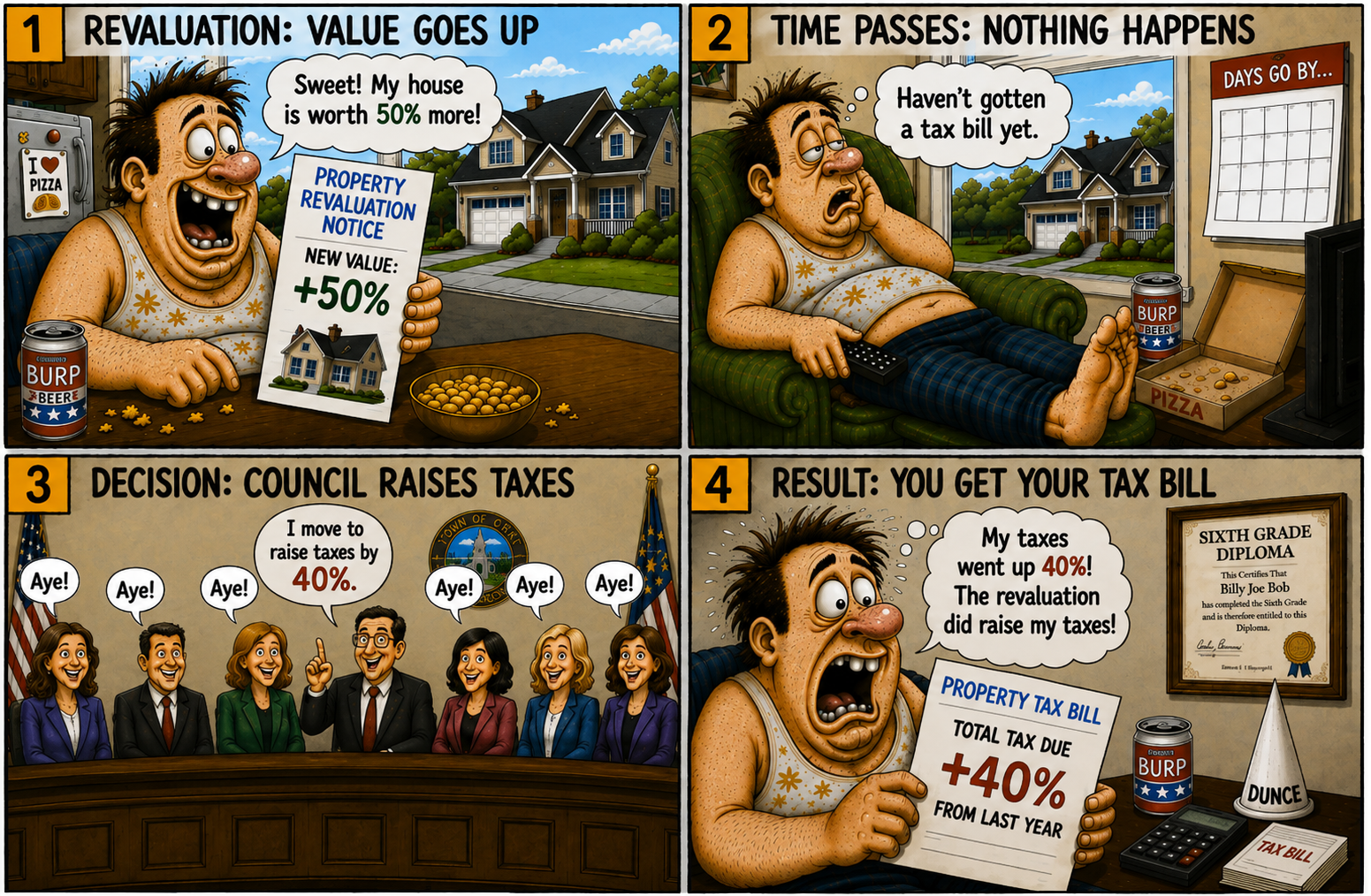
If the Council had wanted to lower the tax bills of homeowners, it could have adopted a rate lower than 22.92 cents.
Note well that there was no reason for the Council to even consider the previous year's tax rate in setting this current year's rate. It was simply not relevant to the issue. Note well also that there was no reason to consider the tax rates adopted by the County and other nearby towns. Those rates were likewise irrelevant.
The Town of Cary Council unanimously voted to set the tax rate at 32.5 cents. This was an increase of 41.8% – by far the largest tax increase in the Town's history.
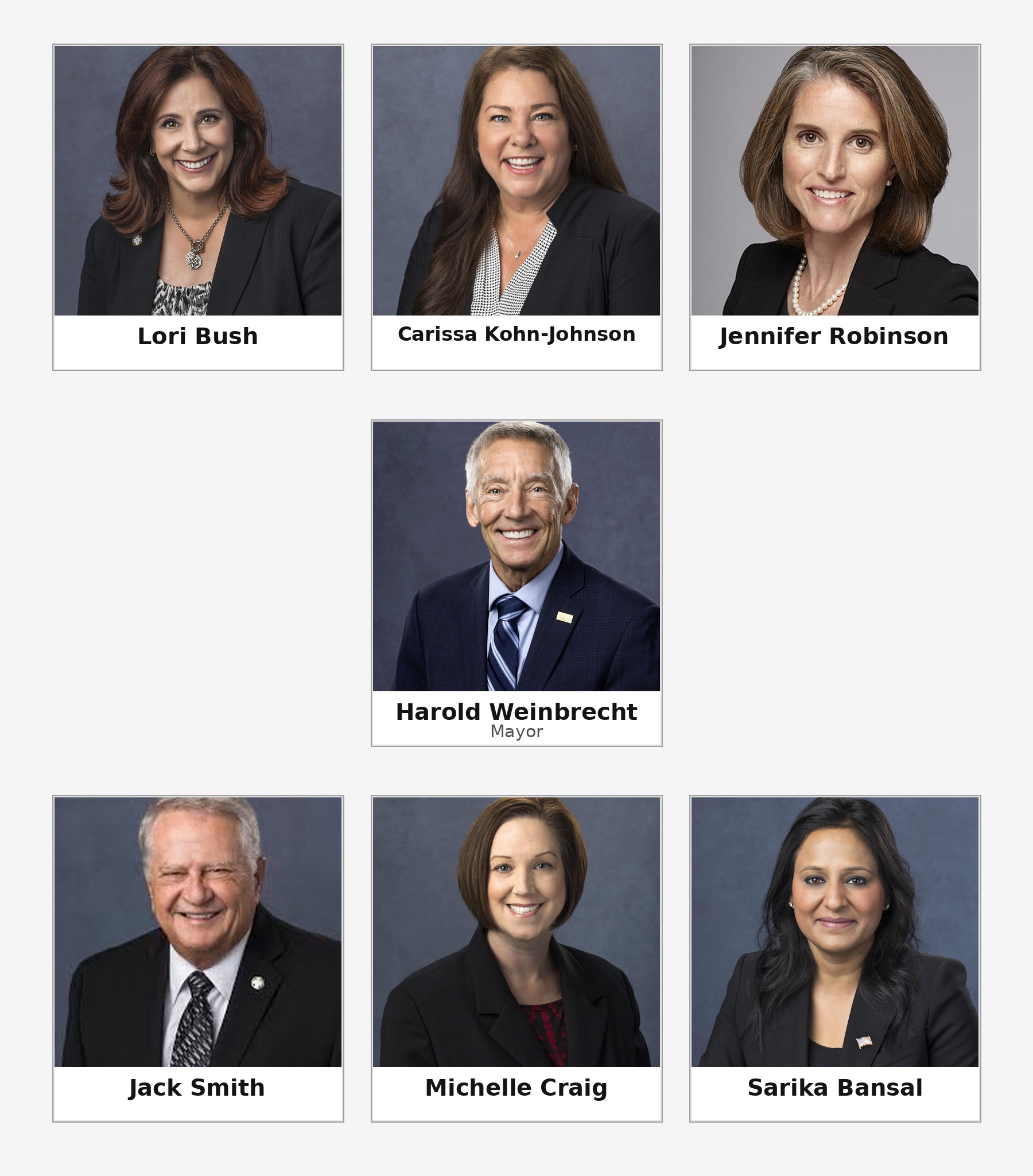
After the increase, Mayor Weinbrecht repeatedly stated, including several times in his State of Cary addresses, that Cary still had the lowest tax rate in Wake County and was careful to avoid saying the amount of the increase, or even that there was an increase. Another Council member wrote later in her newsletter that Cary hadn't had a tax increase in over a decade. Yet another, when directly informed of the exact amount of the increase, declared that the figure "had not been verified." No Council member heeded the plea to have the amount of the tax hike confirmed by a licensed accountant. To date, no Council member has ever uttered or written in public the amount of the increase.
Nevertheless, a concerned citizen determined what the increases meant for the Council members themselves. Those 2024 increases are shown in this chart. [Although the information is public, the names have been removed.]
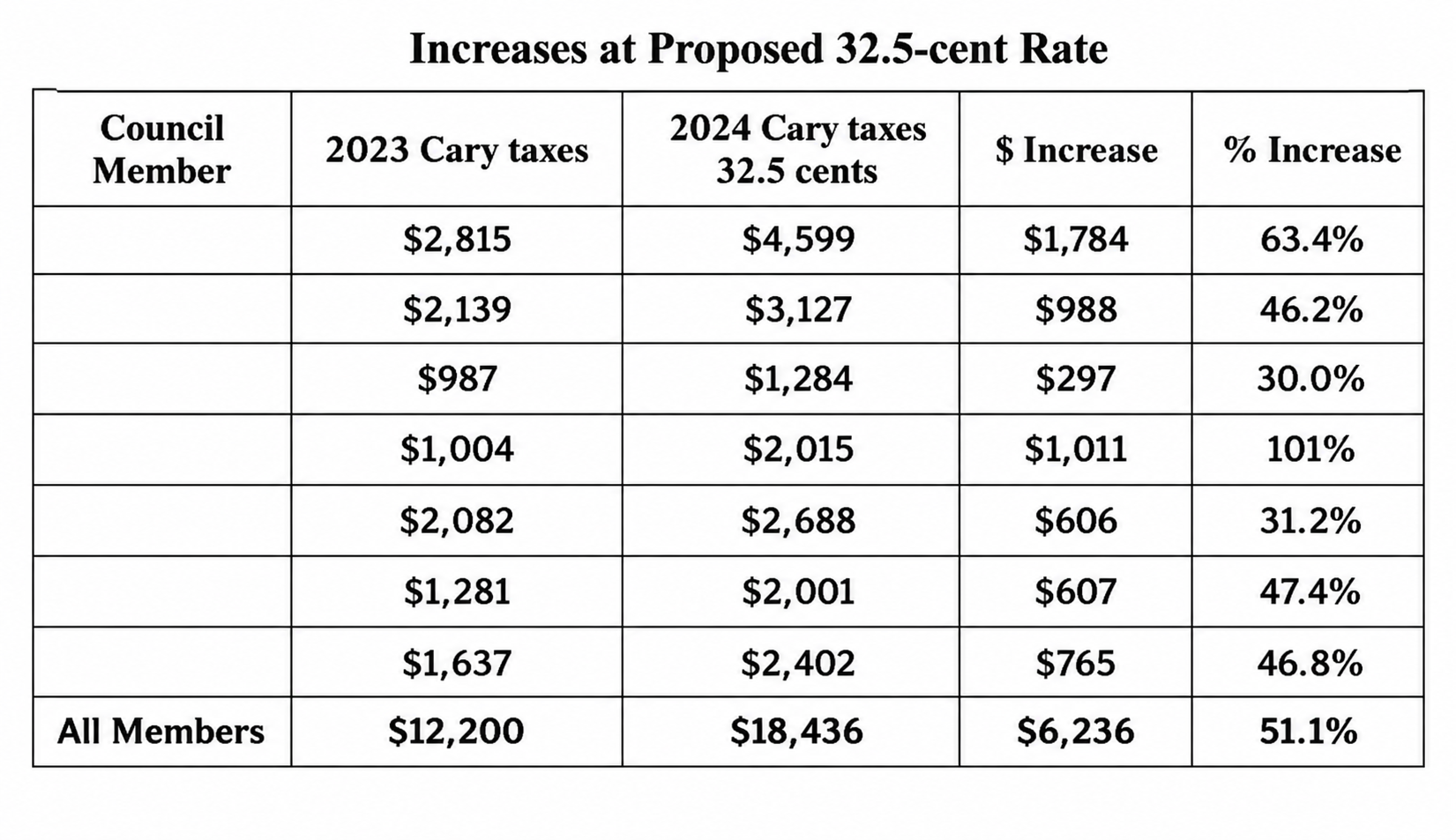
Note that the average (aggregate percentage) increase for all seven Council members was not 41.8%, but 51.1%. This holds not just for the Council members, but also for all Cary homeowners. The following chart shows the tax increases for a group of citizens who asked that their increases be calculated. [The figures shown in red are those (lucky?) homes whose tax bills increased less than 40%.]
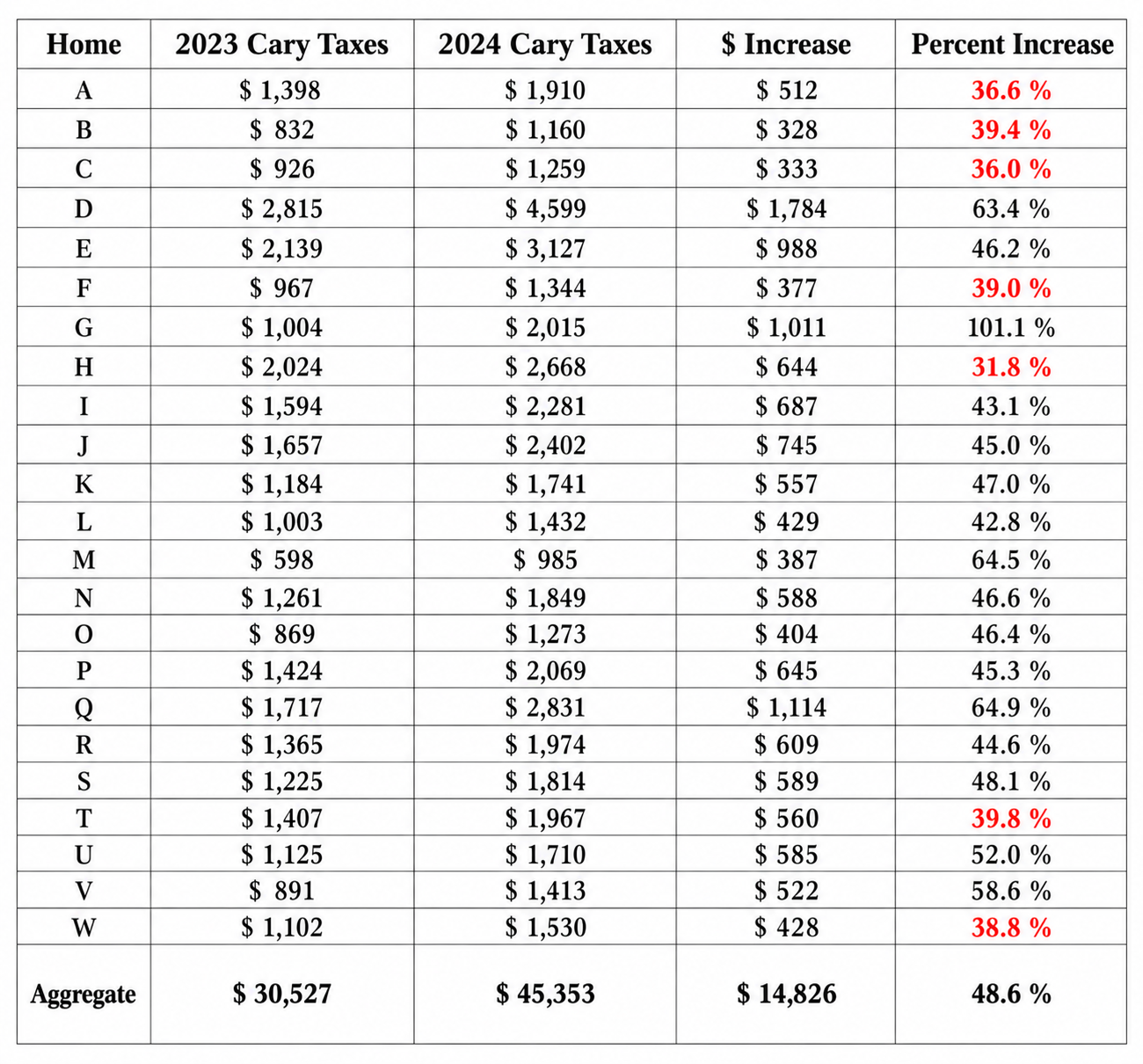
The reason these homes increased more than the overall 41.8% was because residential property increased by 55.58% whereas commercial properties increased by only 39.15%. Thus, homeowners bore more of the huge increase than did commercial property owners.
Sadly, this isn't the end of the tale. In June, 2025 the same Council members pictured above voted unanimously to increase Cary property taxes by another 4.6%. Claiming to have gone over the proposed budget with their fine-toothed combs to find fat to cut from the budget, they missed the $330,000 spent on the Dancing Queens videos, the $180,000 spent on Sean's book, the . . . . —— I won't go on.
Suffice it to say the searching Council members found none of the wasted tax money documented by the State Auditor, the Raleigh law firm, and scores of ordinary citizens using public-information requests. So up went our taxes.
At the end of 2025, Mr. Smith retired and Mrs. Robinson lost her bid for re-election. Two new members joined the Council. Presumably they too were issued fine-toothed combs, but in using them to search the proposed budget in June 2026, they too found nothing to cut. They joined the other five Council members in voting unanimously to raise taxes by another 8.1%.

The 2024 increase was not a one-time windfall; the additional taxes are collected each year. The 2025 increase of 4.6% compounded the 41.8% increase of 2024. And the 8.1% increase is on top of the 2024 and '25 increases. Thus, our Cary property taxes have increased at the following rate in just three years.
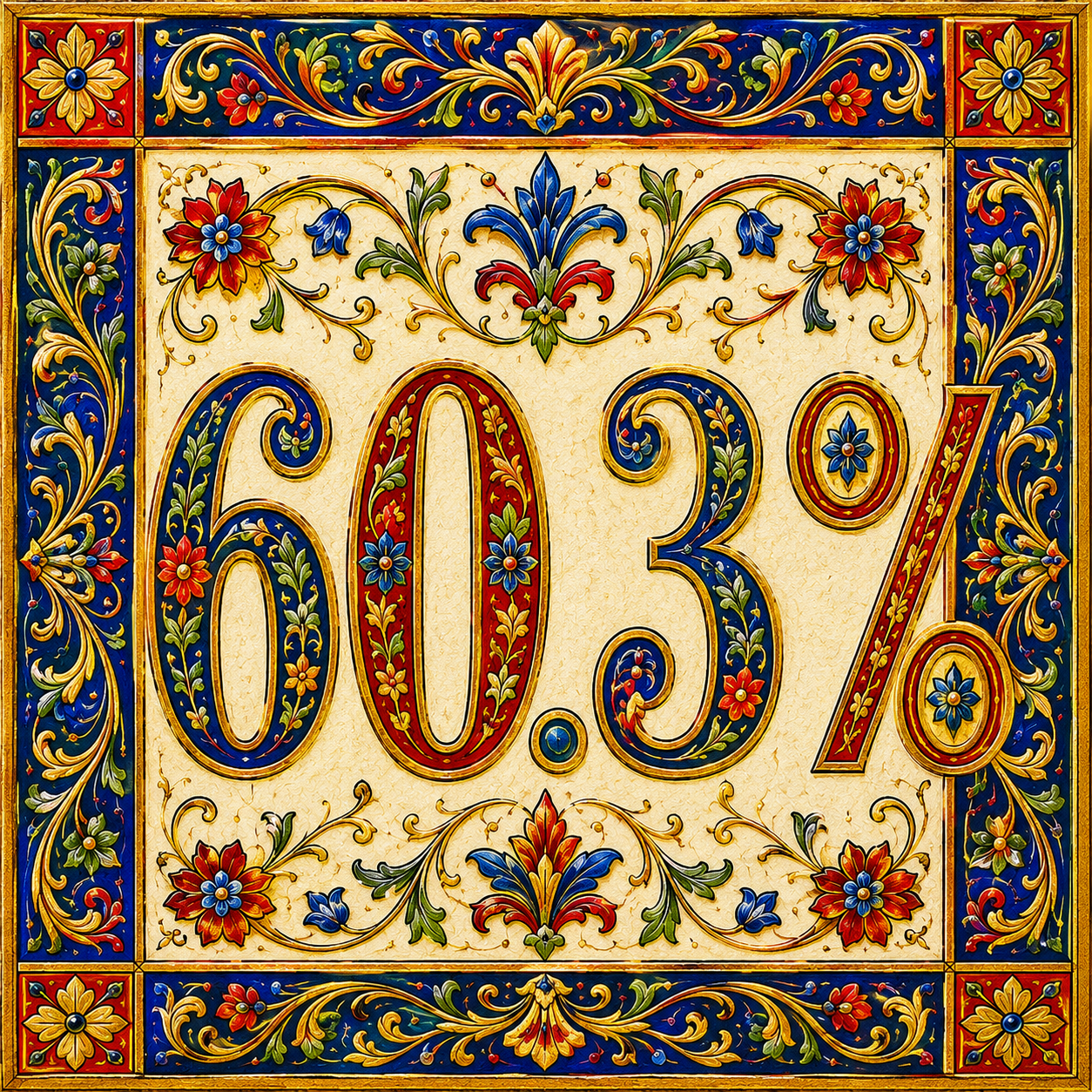
And there is no indication from any Council member that the additional yearly taxes have slaked the Town's thirst for taxpayer money, nor that the onslaught of increases will be halted.
And there is no transparency on where the huge additional amounts of revenue collected each year are being directed.
If something is not fishy here, perhaps some Council member will explain exactly where these huge sums of annual money are going.